
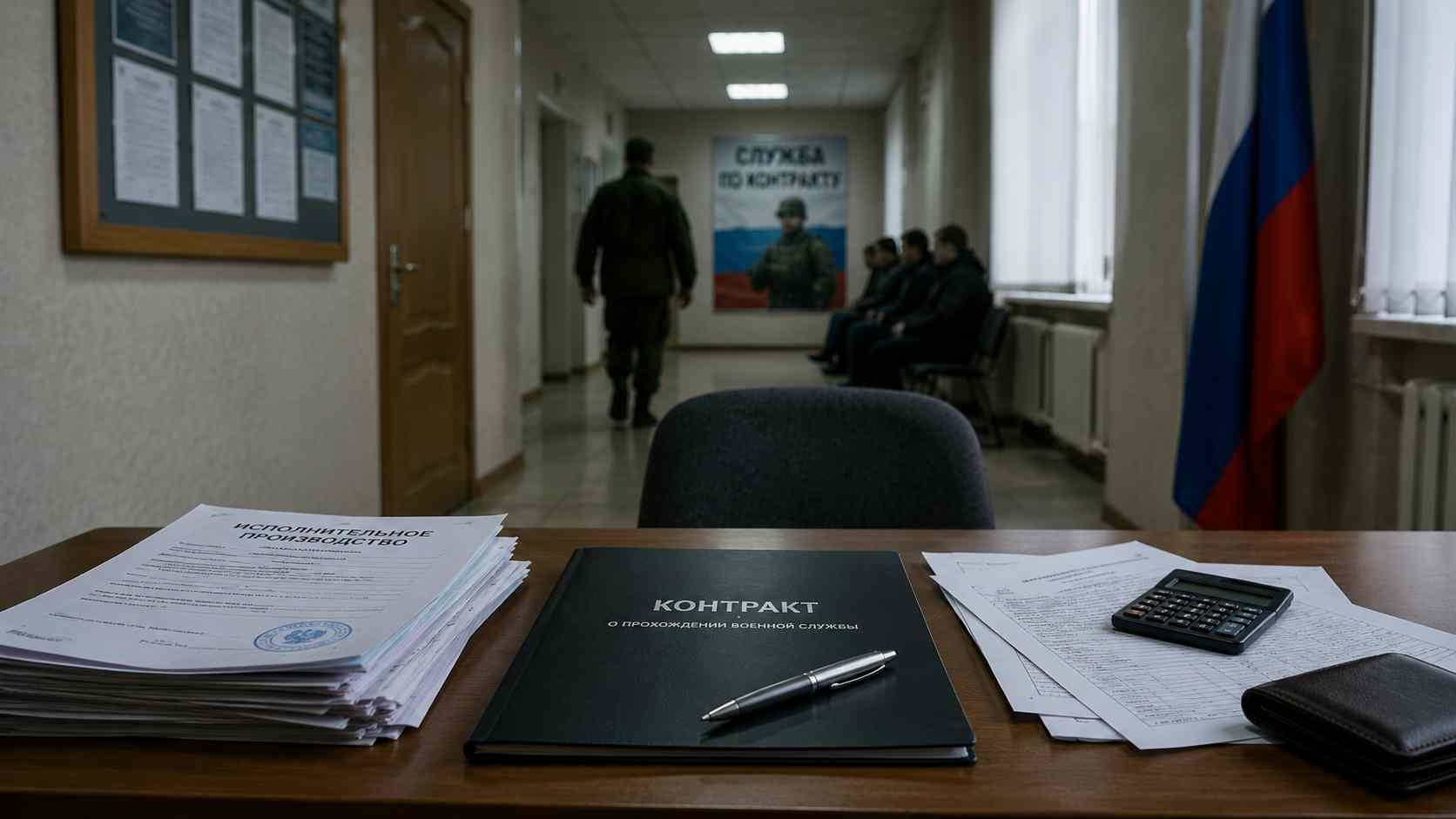
Russia debt relief for Ukraine-war recruits moved back into focus after the Kremlin said President Vladimir Putin signed a measure offering write-offs of up to 10 million roubles for some new military contractors and their spouses.
The measure applies to people who signed contracts with Russia’s Defence Ministry from May 1, 2026, and to spouses, if collection proceedings or similar enforceable claims existed before that date. The contracts must run for at least one year and relate to Russia’s war in Ukraine, which Moscow officially calls a “special military operation.”
The policy matters because it shows how the Kremlin is continuing to use personal financial incentives to draw manpower into a war that began with Russia’s full-scale invasion of Ukraine in February 2022. It also comes as diplomatic efforts remain uncertain and both sides continue preparing for further pressure along the front.
Context
Russia has repeatedly expanded benefits for soldiers and volunteers since the war became a long, manpower-intensive conflict. Earlier debt-relief legislation signed in November 2024 allowed similar write-offs for recruits who signed contracts from December 1, 2024, under conditions tied to existing debt-collection proceedings.
That earlier package was reported as part of a wider recruitment strategy that included large regional payments, federal bonuses, and social benefits for service members and their families. The political purpose was clear: increase the pool of contract soldiers without repeating the domestic shock caused by the partial mobilization announced in September 2022.
The latest measure appears to extend or renew that incentive structure for a new group of recruits starting from May 2026. Russian outlets described the update as applying to participants in the “special military operation” and their spouses, with the same upper limit of 10 million roubles.
Mechanism
The debt relief is not a general cancellation of all personal debts. It is tied to specific legal conditions.
According to reporting on the measure, the person must have signed a qualifying military contract from May 1, 2026, and the debt must already have reached a legally enforceable stage before that date. That can include a court ruling, an enforcement document, or an opened enforcement proceeding.
The maximum amount covered is 10 million roubles. Reuters reported that this was about $139,700 at the exchange rate it used in its report, while Russian legal commentary focused on the rouble cap and eligibility rules.
The benefit can also apply to spouses. That detail matters because household debt can pressure an entire family, not only the person signing the contract.
Stakeholders
The clearest intended beneficiary is a Russian citizen with serious debt who is considering military service. For such a person, a one-year contract may now be linked not only to pay and benefits, but also to relief from court-enforced debt.
The Kremlin benefits if the policy helps maintain recruitment without a new large-scale mobilization order. Avoiding another mobilization is politically important because the 2022 call-up triggered public anxiety, protests, and the departure of many men from Russia.
Banks and creditors may face losses or administrative complications depending on how compensation and enforcement are handled under Russian law. Families of recruits may gain short-term financial relief, while also facing the much larger risk that military service brings.
Ukraine and its partners will read the move as another sign that Moscow is still preparing to sustain combat operations. It does not prove the scale of future Russian deployments, but it does show that the state is adding another lever to pull people into the armed forces.
Data and Evidence
The central figure is the 10 million rouble ceiling. Reuters described the write-off as roughly equal to the cost of a small Moscow apartment, giving a sense of how large the incentive can be for a household under debt pressure.
Russian legal and business outlets reported that the updated rules cover people signing contracts from May 1, 2026, for at least one year. They also noted that qualifying debts must have had a court decision, enforcement document, or enforcement proceeding before that date.
The new measure follows the November 2024 law that also set a 10 million rouble cap for certain recruits and spouses, beginning with contracts from December 1, 2024. That timeline shows continuity rather than a one-off experiment.
Analysis
The strongest explanation is that Russia is trying to keep recruitment channels open by attaching military service to problems many households already feel: debt, unstable income, and limited upward mobility. A cash bonus helps immediately, but debt relief can reshape a family balance sheet.
This is a blunt policy tool. It turns a private financial problem into a recruitment opportunity for the state.
The measure also suggests that the Kremlin still prefers targeted inducements over another broad mobilization, at least for now. Contract recruitment is easier to present as voluntary, even when the choices facing indebted people are shaped by pressure.
For the war, the consequence is not automatic battlefield change. A debt-relief policy does not train soldiers, equip units, or solve command problems. But it can help keep the personnel pipeline moving, especially if combined with bonuses, regional payments, education preferences, and other benefits.
Counterpoint
There are important limits to what can be concluded. The measure does not reveal how many people will sign contracts because of debt relief, nor does it confirm whether Russia is meeting its recruitment goals.
It is also possible that some recruits would have signed anyway because of pay, ideology, local pressure, or lack of other work. Debt relief may be one factor among many rather than the decisive reason.
Another uncertainty is how efficiently the rule will be applied. Russian debt-enforcement, banking, and military bureaucracies may not process every case in the same way, and public reporting so far does not provide a full implementation record.
Consequence
The immediate consequence is that some new recruits and spouses can have large debts written off if they meet the legal conditions. For those households, the offer may change the cost-benefit calculation around military service.
The wider consequence is political and military. Russia is showing that it is prepared to spend financial and legal resources to maintain manpower for the Ukraine war.
For Ukraine and Western governments, the policy adds evidence that Russia is not simply waiting for diplomacy to settle the war. Moscow is continuing to adjust domestic systems around a long conflict.
What to Watch
The key question is whether the measure produces a visible rise in contract signings after May 1, 2026. Russian authorities may promote the benefit more aggressively if recruitment slows or battlefield needs increase.
Another point to watch is whether regional governments add their own payments on top of the federal debt-relief rules. That would make the total package more attractive and deepen competition among regions to meet recruitment targets.
It will also matter whether creditors, courts, and enforcement agencies publish clarifications on how the write-offs work. The more automatic the relief becomes, the stronger the incentive for debt-burdened households.
Sources
Sources = Russia's Putin provides debt relief to new Ukraine war recruits and their families — Reuters — May 26, 2026
Sources = Путин подписал закон о списании долгов участникам СВО и их супругам — RBC — May 25, 2026
Sources = Новый этап списания долгов по кредитам участников СВО: инициатива прошла Госдуму — Consultant.ru — May 14, 2026
Sources = Putin signs law forgiving debt arrears for new Russian recruits for Ukraine war — Reuters — November 23, 2024
Sources = Moscow offers debt forgiveness to new recruits and AP sees wreckage of a new Russian missile — Associated Press via VOA — November 24, 2024