
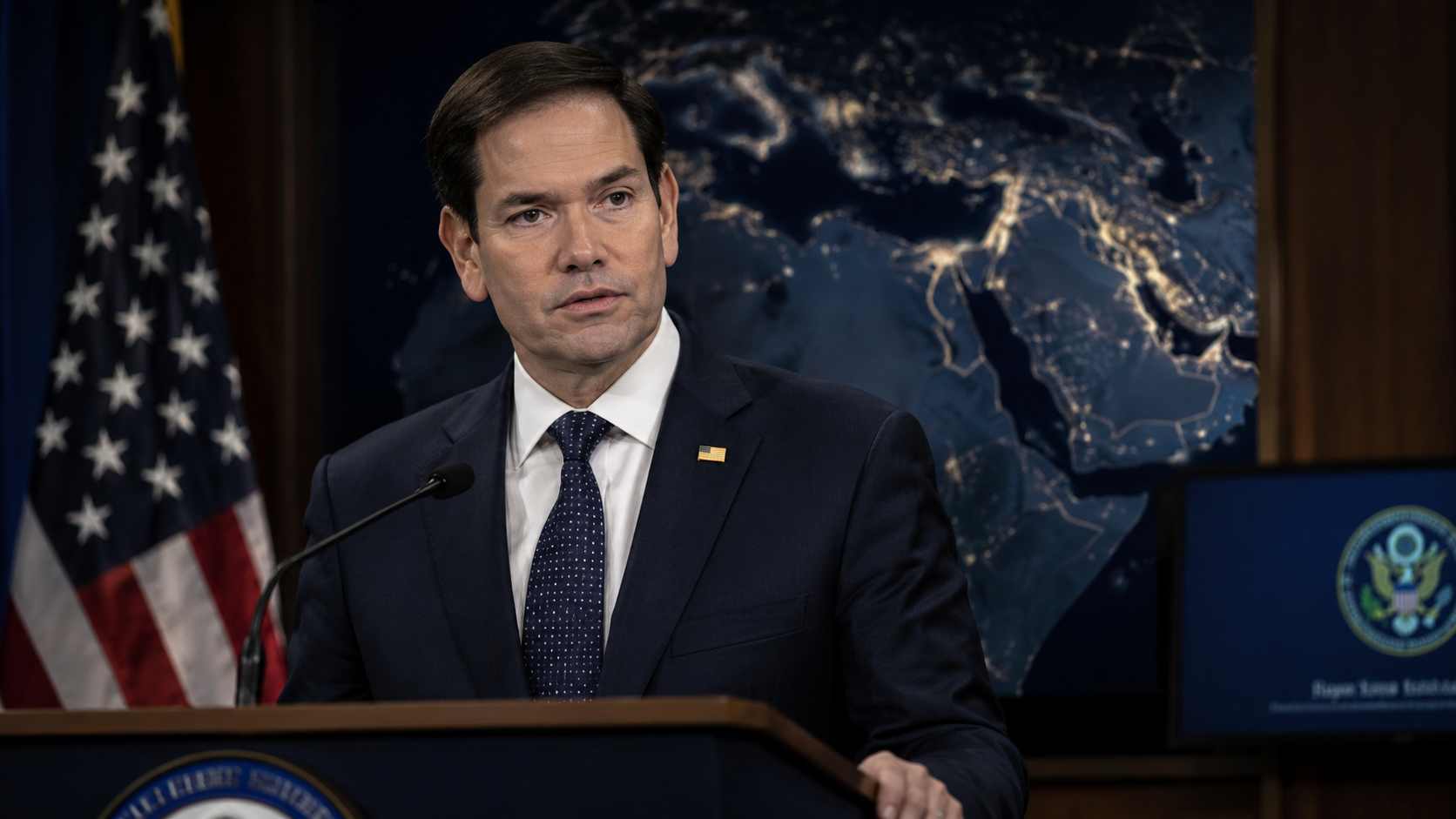
Rubio’s Iran warning sharpened the stakes around U.S.-Iran diplomacy on May 25, 2026, as Washington said it would either secure a “good agreement” with Tehran or handle the dispute “another way.”
The remark, reported by Reuters, came as negotiations over Iran, the Strait of Hormuz and nuclear restrictions entered a sensitive phase. It matters because the same diplomatic track influencing security calculations is also moving oil, currencies and broader market risk.
U.S. officials have continued to frame diplomacy as the preferred route. But Rubio’s wording signaled that Washington is also trying to preserve pressure if talks fail.
Context
The latest U.S.-Iran talks are unfolding after months of conflict, mediation and market stress tied to the Strait of Hormuz, a critical corridor for oil and liquefied natural gas shipments.
Reuters reported that President Donald Trump said a framework for an Iran deal had been “largely negotiated,” including a provision connected to reopening the strait. But U.S. officials have also played down expectations of an immediate breakthrough, saying more work remains.
Rubio had earlier said there were signs of progress, while also warning that the details would determine whether any agreement was acceptable. Iran’s foreign ministry has said differences between the sides remain deep and significant, according to Reuters reporting on the negotiations.
Mechanism
Rubio’s message works through diplomatic leverage. By saying the United States wants a good agreement but has alternatives, Washington is trying to keep pressure on Iran while leaving space for talks to continue.
That matters because negotiations are not only about a signed document. They also shape the expectations of governments, energy traders, shipping firms and investors who are trying to judge whether the region is moving toward de-escalation or renewed confrontation.
If talks produce a credible deal, markets may price in lower disruption risk around energy flows. If talks collapse, the same markets could quickly reverse and rebuild a premium for supply danger.
Stakeholders
The main actors are the United States, Iran and the mediators trying to keep negotiations alive. Pakistan has been involved in mediation efforts, according to Reuters reporting on recent talks.
Energy importers, shipping companies and oil producers are also directly exposed. Any change in access, security or tolling around the Strait of Hormuz can affect expectations for crude and liquefied natural gas flows.
Investors are another stakeholder group. Reuters market coverage showed traders linking signs of progress on Iran and Hormuz to stronger risk appetite, lower oil prices and a weaker dollar.
Data and Evidence
Reuters reported on May 25, 2026, that Rubio said the United States would either get a good agreement with Iran or deal with the country “another way.” The report said Washington was playing down hopes for an imminent breakthrough even as negotiations continued.
A separate Reuters markets report on May 25 said the dollar weakened and oil prices fell as signs of a possible deal to reopen the Strait of Hormuz lifted risk appetite. Brent crude was reported down 5.4% to $97.91 per barrel, while West Texas Intermediate fell 5.7% to $91.10 per barrel.
Reuters also reported on May 23 that Trump said the framework of an Iran deal was largely negotiated, including a provision to reopen the strait. That sequence helps explain why markets treated diplomatic signals as economically meaningful rather than purely political.
Analysis
The strongest reading is that Washington is trying to combine reassurance and pressure. Rubio’s phrase leaves room for diplomacy, but it also warns Iran that failure will not simply freeze the situation.
That approach can strengthen a negotiating position when the other side believes the alternative is credible. It can also raise the danger of miscalculation if either side treats public pressure as a threat that must be answered rather than a bargaining signal.
For markets, the key issue is not only whether leaders sound optimistic. The key issue is whether a deal changes real-world risks around energy movement, sanctions, nuclear limits and military escalation.
Counterpoint
There is still uncertainty about what “another way” means in practical terms. Rubio did not define a specific alternative in the reported comments, and diplomacy often includes deliberately broad language meant to preserve leverage.
There is also a serious argument that markets may be moving faster than the diplomacy. Reuters reporting showed optimism in oil, currencies and equities, but officials continued to caution that no final agreement had been completed.
That gap matters. A framework, a political statement and a signed enforceable agreement are not the same thing.
Consequence
Rubio’s statement raises the cost of failure in the public diplomacy around Iran. It tells Tehran, U.S. allies and investors that Washington is not presenting negotiations as open-ended.
The immediate consequence is a sharper binary around the talks: a deal could ease pressure on energy markets and reduce regional risk, while a breakdown could revive fears of confrontation and supply disruption.
That makes each new official statement more important. Traders and governments are watching not just the words, but whether the words point toward a final agreement or a harder fallback strategy.
What to Watch
The next signals to watch are whether U.S. and Iranian officials confirm a final framework, whether Iran accepts terms tied to Hormuz and nuclear restrictions, and whether mediators describe the talks as narrowing or widening.
Energy markets will also be an early indicator. If oil continues to fall and the dollar stays under pressure, traders may be betting that diplomacy is gaining traction.
If prices reverse sharply, it may suggest investors are rebuilding risk premiums because the talks are losing credibility.
Sources
Sources = Rubio says US will find 'another way' if Iran talks fail — Reuters — May 25, 2026 Sources = Dollar softer as signs of deal to reopen Hormuz spur risk appetite — Reuters — May 25, 2026 Sources = Trump says framework of Iran deal 'largely negotiated,' with provision to reopen strait — Reuters — May 23, 2026 Sources = US Secretary of State Rubio sees progress in Iran talks, but says more work required — Reuters — May 22, 2026