
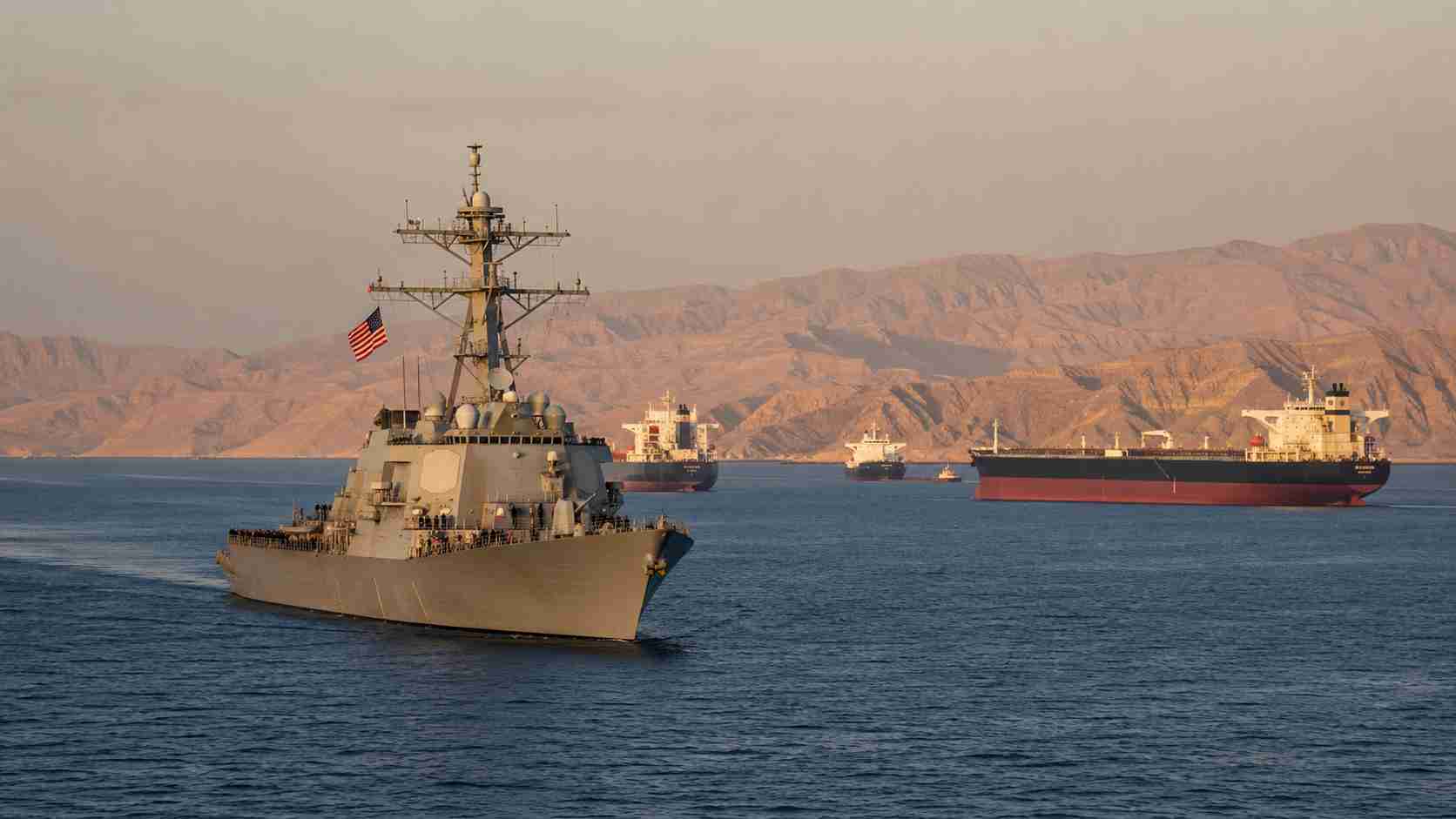
US-Iran deal talks have moved close enough for President Donald Trump to say a framework is “largely negotiated,” but the Strait of Hormuz remains the decisive test for whether diplomacy can turn into a workable settlement.
Reuters reported on May 24, 2026, that Trump said Washington and Tehran had largely negotiated a memorandum of understanding that would reopen the strait, while also saying the United States was in “no rush” and that final details still had to be resolved.
The issue matters far beyond Washington and Tehran. Hormuz is one of the world’s most important energy chokepoints, and even partial disruption can move oil prices, shipping costs, inflation expectations and market risk.
Context
The talks come after months of conflict involving the United States, Israel and Iran, with the Gulf’s shipping lanes becoming a central pressure point. The United States has maintained a naval blockade affecting Iranian maritime trade, while Iran has asserted control over traffic through the Strait of Hormuz.
Reuters reported that the emerging diplomatic framework would include a provision to reopen the strait. But the same reporting showed that reopening is not simply a switch to be flipped. It is tied to wider disputes over sanctions relief, frozen assets, Iran’s nuclear activity, and who controls or monitors shipping passage.
Al Jazeera reported on May 20, 2026, that Iran’s Islamic Revolutionary Guard Corps said it had coordinated the transit of 26 vessels through Hormuz in 24 hours. That claim underscored Tehran’s argument that traffic is moving under Iranian coordination, not under unrestricted international access.
Mechanism
The core mechanism under discussion appears to be a phased arrangement: the United States wants the waterway open and free of tolls or coercive control, while Iran wants relief from pressure, recognition of its role in the strait, and broader concessions linked to the war and sanctions.
Reuters reported that U.S. Secretary of State Marco Rubio warned a tolling system or similar Iranian control arrangement would make a diplomatic deal unfeasible. Trump also described the strait as an international waterway and said Washington wanted it open and free.
That makes Hormuz both a shipping issue and a diplomatic enforcement issue. A deal cannot only say that ships may pass. It must answer who verifies passage, who escorts vessels, whether Iran can impose fees or conditions, and when the U.S. blockade would be lifted.
Stakeholders
The United States is trying to convert military and economic pressure into a settlement that restores shipping flows without conceding Iranian control over a strategic waterway.
Iran is seeking relief from blockade pressure and sanctions while preserving leverage over Hormuz and its nuclear program. Tehran has denied seeking nuclear weapons and has maintained that its enrichment activity is for civilian purposes.
Energy importers, insurers, shipowners and Gulf governments are also exposed. For them, the practical question is not whether leaders announce progress. It is whether tankers can move predictably, insurance risk falls, and cargoes stop being trapped in political bargaining.
Oil consumers face the pressure in a more ordinary way: higher fuel prices, higher transport costs and more expensive goods if the strait remains unreliable.
Data and Evidence
Reuters reported that before the war, roughly one-fifth of the world’s oil and natural gas transited the Strait of Hormuz. That scale explains why even limited movement toward reopening can affect oil markets quickly.
Reuters also reported that ship traffic had fallen sharply from the prewar level of roughly 125 to 140 daily passages, while Iran’s IRNA news agency said 31 ships had passed in a 24-hour period under Iranian naval coordination.
Al Jazeera separately reported Iran’s claim that 26 vessels had crossed in 24 hours in coordination with the IRGC Navy. Those figures do not prove normal traffic has resumed. They show that limited movement is occurring while the rules of passage remain contested.
Reuters reported oil prices fell as hopes increased that the United States and Iran were moving closer to a peace deal. That market reaction reflects expectations, not confirmation that the waterway has returned to normal.
Analysis
The strongest explanation is that both sides see value in a deal but disagree over what reopening Hormuz actually means.
For Washington, reopening means free passage and the rollback of Iranian leverage over commercial shipping. For Tehran, reopening appears tied to bargaining power: sanctions relief, assets, compensation claims, and recognition of Iran’s ability to regulate movement near its coast.
That gap is why Trump’s “largely negotiated” language does not settle the story. A framework can exist while the hardest parts remain unresolved. In diplomacy, a shared outline often arrives before the rules, sequencing and enforcement mechanisms are agreed.
The market reaction also carries a warning. Oil can fall on optimism before ships, insurers and governments believe the route is actually safe. A statement from leaders is not the same as a functioning maritime corridor.
Counterpoint
There is a serious opposing view: the reported progress may still be meaningful even if Hormuz remains unresolved. A partial framework can reduce escalation risks, create time for technical talks, and give mediators space to align sequencing between sanctions relief, nuclear commitments and shipping access.
There is also uncertainty around public claims from both sides. Iran says traffic is being coordinated. The United States says the blockade remains and that unrestricted passage is essential. Those positions may describe the same reality from opposite angles: some ships are moving, but the waterway is not operating under normal conditions.
Consequence
The immediate consequence is that Hormuz has become the test of whether the reported U.S.-Iran framework is diplomatic progress or only a temporary pause in pressure.
If the strait reopens under rules accepted by major shipping actors, oil prices and inflation expectations could ease. If the dispute persists, the market may treat the framework as fragile, and Gulf shipping risk will remain priced into energy and freight costs.
For regional politics, the dispute also shifts leverage. Whoever controls the practical terms of passage controls one of the most important pressure points in the Gulf.
What to Watch
The next signals will be specific, not rhetorical. Watch whether Washington announces a formal memorandum, whether Iran accepts unrestricted passage without tolls, whether the U.S. blockade is eased, and whether daily ship traffic rises toward prewar levels.
Also watch how energy markets respond after the first details are published. A brief drop in oil prices would show optimism. Sustained declines would suggest traders believe the route is actually reopening.
The most important question is simple: can ships pass without asking a military power for permission? Until that answer is clear, the deal remains unfinished.
Sources
Sources = Trump says Iran deal ‘largely negotiated’, would reopen Strait of Hormuz — Reuters — May 24, 2026
Sources = US and Iran still at odds on key issues, but both sides report progress — Reuters — May 21, 2026
Sources = Iran claims it coordinated passage of 26 vessels out of Hormuz in 24 hours — Al Jazeera — May 20, 2026
Sources = Chinese supertankers exit Hormuz as Trump and Vance talk up Iran deal prospects — Al Jazeera — May 20, 2026